Jun 29, 2026 · Google News
Drone Incidents Near Runways Are a Systems-Design Problem, Not Just an Aviation Problem
A reported drone encounter involving a JetBlue flight near JFK shows why passenger defense needs layered sensing, accountable AI, and clear jurisdiction across aviation, transit, regulators, and builders.
Curated coding article
Summary
A reported drone encounter involving a JetBlue flight near JFK shows why passenger defense needs layered sensing, accountable AI, and clear jurisdiction across aviation, transit, regulators, and builders.
Lead thesis
A reported drone encounter on final approach to JFK is a reminder that passenger safety now depends on software-defined coordination as much as physical infrastructure. The hard problem is not simply spotting a drone; it is building trusted systems that can detect, classify, escalate, and log a threat fast enough for pilots, controllers, airports, regulators, and operators to act.
Why the source matters
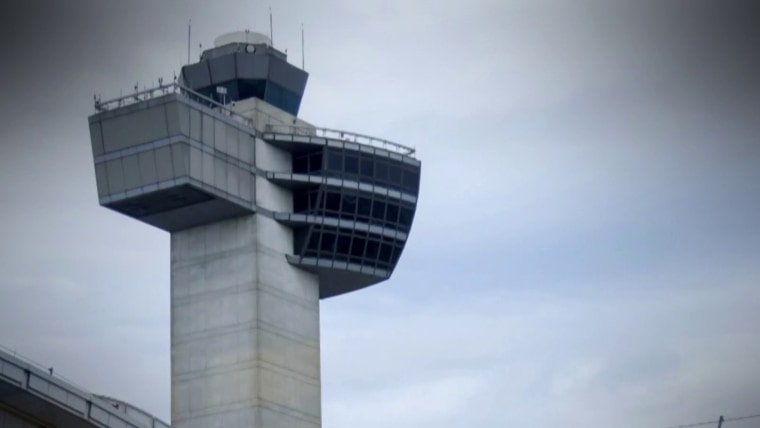
NBC News reported that a JetBlue aircraft arriving from Las Vegas reported a drone encounter while landing at JFK. The flight landed without incident, passengers deplaned safely, and JetBlue said there was no damage or evidence of a collision. The FAA said the reported event happened at about 3,000 feet on final approach and will investigate.
That combination matters: a high-consequence report, no immediate visible damage, and an investigation-dependent truth layer. For builders, this is the shape of many modern safety systems: incomplete signals, multiple authorities, and a need for defensible telemetry rather than assumptions.
New technologies to defend passenger airliners
The practical defense stack should look less like a single anti-drone gadget and more like a distributed safety mesh:
- Sensor fusion: radar, RF detection, optical systems, ADS-B-adjacent context, and airport operational data combined into one event timeline.
- Edge classification: low-latency models that distinguish birds, drones, aircraft reflections, weather artifacts, and sensor noise.
- Pilot/controller UX: alerts that are terse, confidence-scored, and operationally useful instead of dashboard clutter.
- Evidence capture: immutable logs, synchronized timestamps, sensor provenance, and replayable incident packages for investigators.
- Safe response boundaries: systems that recommend escalation without creating new hazards around dense passenger airspace.
The same pattern can extend to passenger rail and urban transit. Trains face different physics and rights-of-way, but the software problem rhymes: identify unauthorized objects, classify risk near crowded corridors, notify operators, preserve evidence, and coordinate across agencies without overloading humans.
Conflict of government angle
The governance challenge is fragmented by design. Airports, the FAA, local law enforcement, city agencies, transit authorities, private airlines, rail operators, vendors, and possibly property owners may all touch the same incident. Each group has different incentives: safety, enforcement, liability, privacy, continuity of service, public communication, and procurement limits.
For developers, this means the product architecture must assume jurisdictional friction. Role-based access, audit trails, clear data retention policies, interagency export formats, and incident review workflows are not afterthoughts. They are core features if the system is meant to survive real deployment.
AI concerns
AI can help classify ambiguous sensor events, summarize incident timelines, and reduce noise. It can also create new failure modes: false positives that disrupt operations, false negatives that miss threats, opaque confidence scores, model drift, biased training data, and unclear accountability when recommendations influence safety decisions.
Speculation: the strongest near-term use of AI is not autonomous interdiction. It is decision support with human authority preserved: anomaly detection, multimodal correlation, post-incident reconstruction, and simulation-based training for pilots, dispatchers, controllers, and rail operators.
Entrepreneurs and builders
There is room for private entrepreneurs, but not for move-fast safety theater. Promising startup territory includes certified sensor integrations, airport digital twins, transit-corridor monitoring, incident evidence tooling, simulator content, controller-facing UX, and compliance-grade data pipelines.
A credible product in this space should answer five questions:
1. What exact operational decision does the system improve? 2. What confidence level is shown to the human operator? 3. What happens when sensors disagree? 4. Who owns the data after an incident? 5. Can investigators replay the event without trusting a black box?
Weeds angle: regulation as developer infrastructure
Using the supplied weeds data only as creative weighting, the adjacent signal is regulation, apps, developers, and platform governance. That suggests a useful analogy: drone-defense and transit-defense systems may need something like an app-store model for safety modules, but with stricter certification, logging, version control, and revocation.
Speculation: future airports and transit authorities could operate approved marketplaces for detection models, sensor adapters, simulation scenarios, and reporting plugins. The winning developer experience would not be the flashiest AI demo. It would be a boring, auditable deployment path where every model version, alert rule, and operator action is traceable.
Concrete takeaways
- Build for uncertainty: reported incidents may not produce visible damage, so telemetry quality matters.
- Treat alert design as safety-critical UX.
- Keep humans in command for high-impact aviation and transit decisions.
- Design for multi-agency review from day one.
- Make AI explainable enough for operators, investigators, and procurement teams.
- For creative coders, simulation is a powerful entry point: model airspace, rail corridors, sensor blind spots, and human response loops before touching real infrastructure.
Source: NBC News via Google News, “JetBlue plane collides with drone in New York City” — https://www.nbcnews.com/news/us-news/jetblue-flight-collides-drone-new-york-rcna352285